
Handicrafts
Iranian Handicrafts, from Turquoise Inlay to Samovar-Making
Iranian handicrafts are, above all, the story of skilled hands passing a craft down through generations. Each one is rooted in a specific region, taking its shape, colour and pattern from that particular geography.
Turquoise inlay and silverwork are among the oldest Iranian arts. Turquoise stone is set into silver or copper to make rings, necklaces and decorative vessels. Every piece of turquoise has its own veining and colour, so no two pieces of inlay work ever look quite the same.
Kilim weaving is one of the oldest crafts in Iran's rural regions. Wool threads, dyed with natural colours, are woven on a loom into geometric or nature-inspired patterns. Unlike a pile carpet, a kilim is flat-woven on both sides, which makes it faster to weave and more versatile to use — from floor coverings to tablecloths and cushions.
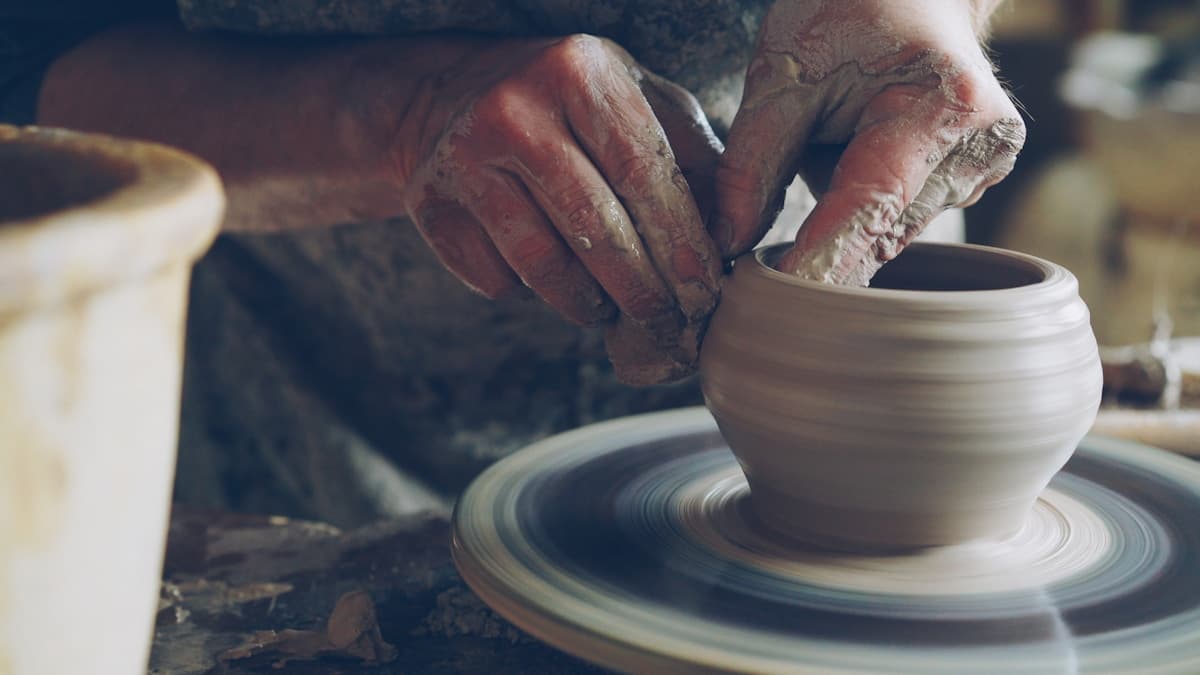
Pottery in Iran goes back thousands of years, from simple rural vessels to bowls hand-painted with traditional patterns. Alongside it, samovar-making is a more demanding craft — metalworkers shaping sheets of copper or brass into a samovar that's both decorative and functional: a symbol of the table around which tea, and conversation, are shared.
Buying a piece of handicraft isn't just buying an object — it's supporting a skill that could fade without demand. That's why, alongside tea, Sehreh tries to bring a little of this craftsmanship into your home too.