

Article · Gilan
Gilan and the Tea Gardens of Northern Iran
· 2 min read
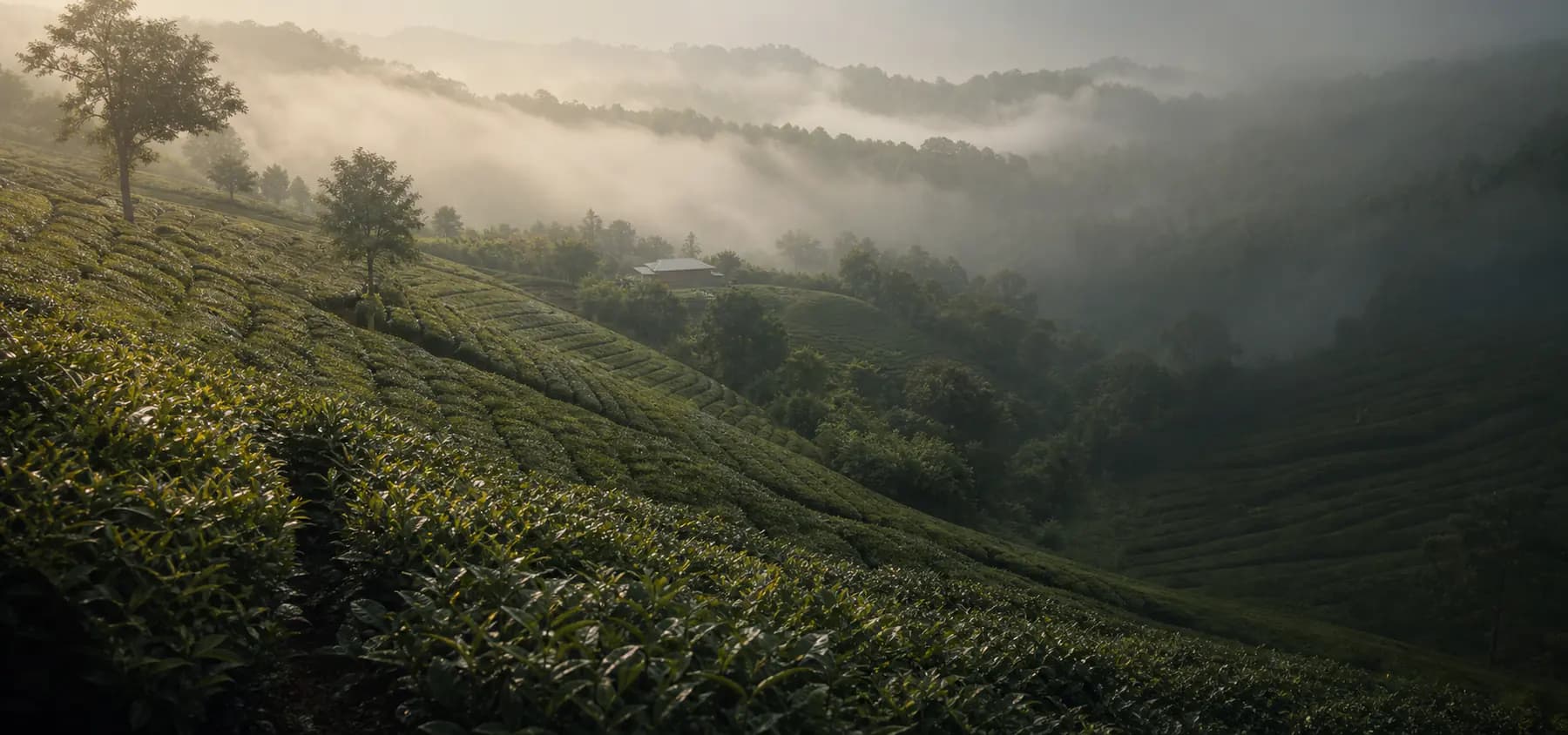
If you've ever driven the roads around Lahijan or Fuman, you've seen the neat rows of tea bushes climbing the hillsides — a green that stretches to the horizon and fades into Gilan's morning mist. That view is no accident: the humid, temperate climate of Gilan and parts of Mazandaran is exactly what the tea plant needs to thrive.
The History Behind It
Tea cultivation in Iran dates back to the late Qajar era. Mohammad Mirza Kashef al-Saltaneh, known as the "Prince of Tea," brought tea saplings from India and planted the first gardens in Gilan. From then on, Lahijan became the heart of Iranian tea production.
Why Gilan's Climate Is Ideal
Heavy rainfall, humid air and the acidic soil of the north create an environment where the tea plant produces thick, flavourful leaves. The short distance from garden to factory is another advantage — fresh leaf enters production as quickly as possible, keeping its natural aroma intact.
Harvest Season
The tea harvest in Gilan usually begins in late spring and continues into late summer. Leaves from the first flush are more delicate and fragrant than later harvests, which is what sets their quality — and price — apart.
The Sehreh Factory, Part of This Same Story
The Sehreh tea factory sits within this exact landscape — in Langarud, right beside the private gardens whose distance to the production line is as short as a single breath. That short distance is precisely what we described above: fresh leaf enters processing without delay, keeping its natural aroma intact; those same gardens are where Sehreh's Premium Black Tea comes from.
Every time you drink a glass of Iranian tea, you're tasting the mist, rain and soil of Gilan — the product of a specific climate that isn't easy to reproduce anywhere else.