

Article · Tea knowledge
Hand-Picked vs. Machine-Harvested Tea: What's the Real Difference?
· 1 min read
You've probably seen the word "hand-picked" on the packaging of many Iranian teas — but what does it actually change? The difference starts at the moment of harvest.
What Does Hand-Picked Harvesting Mean?
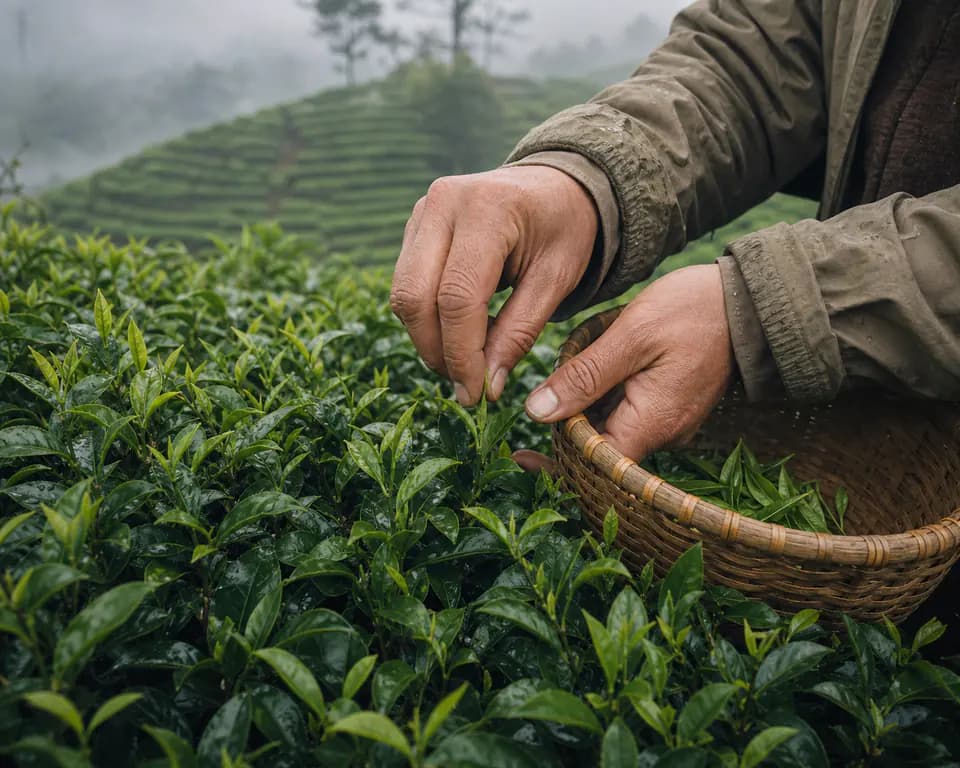
In hand-picked harvesting, garden workers pick only the bud and the top one or two leaves of each branch by hand — the freshest, most flavourful part of the bush. It's a slow method that needs more labour, but the leaf suffers less damage and the grading comes out more consistent.
How Is Machine Harvesting Different?
In machine harvesting, a machine cuts a large section of the bush all at once — young leaf, old leaf, sometimes even stem, all together. It's a much faster method, better suited to producing large volumes at a lower price, but the leaf is less consistent, and some older leaf or stem ends up in the package too.
What This Means for Your Cup
- Hand-picked tea usually has a stronger aroma and a more consistent taste
- Machine-harvested tea is often cheaper but less consistent
Which Should You Choose?
If you're after a consistent taste and a clearer aroma, hand-picked or premium-grade tea is the better choice. If you want everyday, high-volume use and small taste differences matter less, the more economical teas are a reasonable option too — the Sehreh tea factory offers both, with clear information about grade and quality.